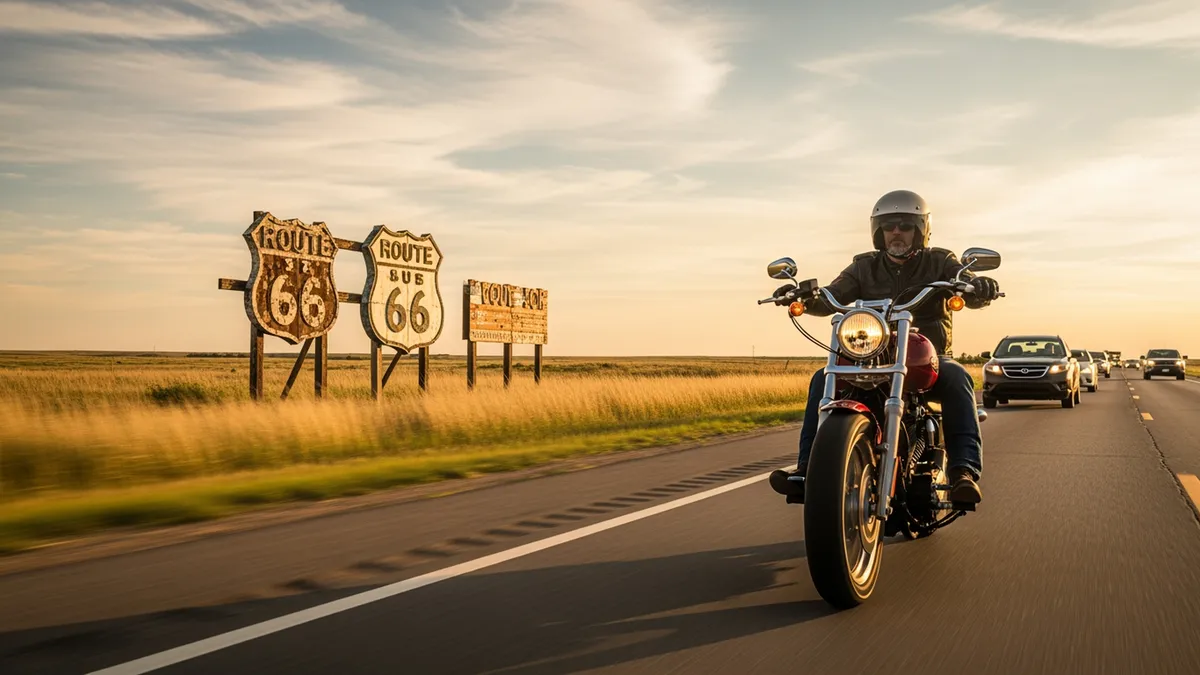
Oklahoma's Helmet Law Only Covers Riders Under 18. Here Is Why Insurers Still Use It Against Adults
Few motorcycle topics generate more confusion at a Tulsa bike night than the helmet law. Some riders are sure Oklahoma requires a helmet for everyone. Others are sure it requires none. Both are wrong, and the gap between them matters, because insurance companies count on riders not knowing exactly where the line is. So let us state it plainly and then deal with the part the adjusters do not want you thinking about.
What Oklahoma Law Actually Says
Oklahoma's helmet rule is age based. State law requires a helmet only for operators and passengers under the age of 18. Once a rider turns 18, wearing a helmet is a personal choice, not a legal requirement. Oklahoma also requires eye protection for riders unless the bike has a windscreen, which is a separate rule people often lump in with the helmet question. So if you are an adult riding down the Broken Arrow Expressway with no helmet, you are not breaking the helmet law. Full stop.
That is the accurate statement, and it is worth being precise about, because a lot of well-meaning advice online overstates it into "Oklahoma requires helmets," which simply is not true for adults. Knowing the real rule is the first step to not getting bluffed.
How Insurers Turn a Legal Choice Into a Fault Argument
Here is where it gets slippery. Even though an adult rider is fully within the law without a helmet, the insurance company for the driver who hit you will often try to use that choice against you anyway. Their angle is not the helmet law. Their angle is Oklahoma's comparative negligence system, where your recovery drops with your share of fault and disappears entirely if you are pushed past 51 percent.
So the adjuster argues that even if the crash was the driver's fault, your head or neck injuries were made worse because you chose not to wear a helmet, and therefore some share of the harm is on you. It is a way to quietly load fault onto the rider through the back door, using a lawful decision to shrink what they owe.
- ✓ They separate the crash from the injury. Even granting the driver caused the wreck, they claim the lack of a helmet caused part of the damage.
- ✓ They aim at the fault percentage. The goal is to nudge your share of fault upward, because in Oklahoma every point higher means a smaller check.
- ✓ They lean on rider bias. They are betting an adjuster, and maybe a jury, will assume a helmetless rider was careless, whatever the law says.
- ✓ They apply it even to injuries a helmet never touches. Broken legs, road rash, and internal injuries have nothing to do with a helmet, yet the argument still gets floated.
How to Protect Yourself, Helmet or Not
The right response is not to panic about a lawful choice you already made. It is to make sure the insurer cannot stretch that choice into fault it does not deserve. That means keeping the focus where it belongs, on the driver who caused the crash, and on medical evidence that ties your injuries to the impact rather than to your gear.
- ✓ Do not accept their fault split. A no-helmet argument on an adult rider is a negotiating tactic, not a settled fact, and it can be challenged.
- ✓ Let the medical records do the talking. The nature and cause of your injuries, documented by your doctors, is what answers a made-worse argument.
- ✓ Watch what you say to the adjuster. An offhand comment about your helmet can be spun into an admission. It is fine to let counsel handle those conversations.
- ✓ Get help early. The sooner someone is documenting the crash the right way, the less room the insurer has to invent your fault.
Why a Helmet Is Still Smart
None of this is an argument against helmets. The law leaving the choice to adults does not change the physics of a fall on I-44 or a deer strike on a dark two-lane out toward Osage County. A helmet remains one of the most effective pieces of safety gear a rider can wear, and choosing one protects your head no matter what any insurer later argues. The point of this post is narrower: your legal right to decide is yours, and an insurance company should not be allowed to convert that right into a discount on what it owes you.

Led by Tony Edwards, Edwards & Patterson in Tulsa fights for injured motorcyclists. Reach out to their Tulsa motorcycle accident attorneys anytime you need real answers.